
Auditory Steady-State Response
ASSR (Auditory Steady-State Response)
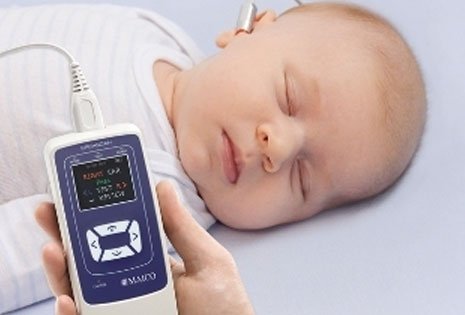
Auditory Steady-State Response (ASSR) is an advanced objective hearing test used to estimate hearing thresholds across different frequencies. This diagnostic procedure evaluates how the brain responds to continuous sound stimulation, making it especially useful for testing infants, young children, and individuals who cannot actively participate in conventional hearing tests.
Benefits of ASSR Testing:
ASSR testing provides frequency-specific hearing information, allowing audiologists to accurately determine the degree and configuration of hearing loss for effective treatment planning.
-
Objective Hearing Threshold Measurement
Determines hearing sensitivity without requiring behavioral responses from the patient.
-
Ideal for Infants and Special Cases
Highly effective for newborns, children, and patients unable to respond during standard hearing evaluations.
-
Precise Hearing Aid Fitting Support
Provides detailed frequency data that assists audiologists in accurate hearing aid programming.
Long Term Hearing Care Support
ASSR testing plays an important role in comprehensive hearing diagnosis and long-term monitoring of auditory health. It helps clinicians track hearing development and evaluate treatment effectiveness over time, ensuring optimal hearing management.
At BNG Audiology & Hearing Care Pvt. Ltd., ASSR assessments are performed using advanced diagnostic systems in a comfortable clinical setting. Our specialists ensure accurate results, clear explanations, and personalized recommendations for ongoing hearing care and rehabilitation.
Frequently Asked Questions
Below are some commonly asked questions regarding ASSR testing and its role in advanced hearing evaluation.
The test is completely painless and non-invasive. Small sensors are placed on the scalp to record brain responses.
The procedure typically takes 30–60 minutes depending on the testing requirements and patient condition.
Infants, young children, and individuals who cannot reliably respond during standard hearing tests are ideal candidates.
Patients are advised to remain relaxed or asleep during testing to obtain accurate recordings.