
VNG (Video Nystagmography)
VNG (Video Nystagmography)
Video Nystagmography (VNG) is an advanced diagnostic test used to evaluate balance disorders by analyzing eye movements. The test helps audiologists and specialists identify problems within the inner ear vestibular system, which plays a vital role in maintaining balance and spatial orientation.
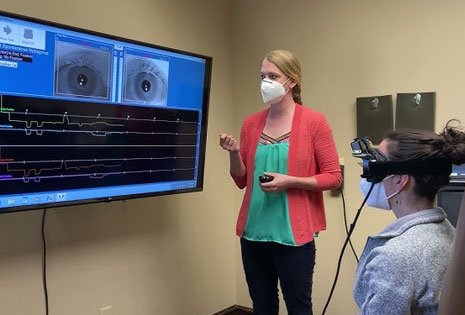
Benefits of VNG Testing:
VNG testing provides detailed information about how the inner ear and brain coordinate eye movements, helping clinicians accurately diagnose dizziness and balance-related conditions.
-
Comprehensive Balance Assessment
Evaluates vestibular system function by tracking eye movements during different visual and positional tests.
-
Diagnosis of Vertigo & Dizziness
Helps identify causes of vertigo, imbalance, and motion sensitivity related to inner ear disorders.
-
Accurate Treatment Planning
Provides objective clinical data that supports effective rehabilitation and balance therapy programs.
Long Term Hearing & Balance Care Support
VNG testing plays a key role in long-term management of vestibular disorders by helping clinicians monitor balance function over time. Early diagnosis allows targeted therapy that improves stability, reduces dizziness episodes, and enhances daily functioning.
At BNG Audiology & Hearing Care Pvt. Ltd., VNG assessments are conducted using advanced video-based diagnostic systems in a safe and comfortable environment. Our specialists provide accurate interpretation and personalized care plans to support long-term balance health.
Frequently Asked Questions
Below are some commonly asked questions regarding VNG testing and balance disorder evaluation.
The test is non-invasive and painless, although some patients may briefly experience mild dizziness during certain procedures.
The evaluation typically takes 45–60 minutes depending on the number of balance assessments performed.
Individuals experiencing vertigo, dizziness, imbalance, or unexplained falls are commonly advised to undergo VNG evaluation.
Patients may be advised to avoid certain medications or heavy meals before testing as instructed by the audiologist.